April 17, 2026

market analysis

Kicking off with btc price today eur, cryptocurrency enthusiasts are always keen to stay updated on the latest developments. The current Bitcoin price in euros is a reflection of various market factors, historical trends, and global events that shape its value. Understanding these elements can provide a clearer picture of where Bitcoin is headed.

As we delve deeper, we will explore the latest pricing, sentiment analysis, and potential future movements of Bitcoin in euros, offering you comprehensive insights that can aid in your investment decisions.

Current BTC Price in EUR

As of today, the price of Bitcoin (BTC) in Euros (EUR) stands at €XX,XXX. This price reflects the latest trading activity and market sentiment surrounding the cryptocurrency. The BTC price in EUR can vary significantly based on various factors, leading to a dynamic trading environment.Several factors influence the current BTC price in EUR. Market demand, investor sentiment, regulatory news, and macroeconomic conditions are crucial elements that can drive the price up or down.

Additionally, the behavior of institutional investors plays a significant role in the market’s direction.Over the past week, the historical price trends of BTC in EUR have demonstrated a mix of volatility and stabilization. The price has seen fluctuations ranging from a low of €XX,XXX to a high of €XX,XXX, showcasing the unpredictable nature of cryptocurrency markets.

Comparison with Other Currencies

In comparison to the price in USD, today’s BTC price in EUR is approximately €X,XXX less than its equivalent in USD, which is currently around $XX,XXX. This discrepancy highlights the variations between currency exchanges and market dynamics. When analyzing how BTC performs against other cryptocurrencies, it remains a dominant player, often leading the market in terms of capitalization and price movements.

Recent trends indicate that while Ethereum (ETH) and other altcoins are gaining traction, BTC’s price in EUR tends to be less volatile, reflecting its status as a market leader.The fluctuations of BTC price in EUR against fiat currencies over the last month reveal interesting patterns, with a general upward trend, although intermittent drops have occurred due to external market pressures.

Market Sentiment Analysis

The current market sentiment surrounding BTC prices in EUR leans towards cautious optimism. Despite recent price volatility, many investors remain bullish, driven by factors such as increased institutional adoption and technological advancements in blockchain.Social media trends reflect this sentiment, with hashtags related to Bitcoin seeing increased activity. Positive news coverage and discussions among influencers impact the BTC price today in EUR, suggesting a correlation between online sentiment and market movements.Investor behavior shows a tendency to react swiftly to recent price changes in BTC EUR.

Many traders are employing strategies to capitalize on short-term price movements, indicative of a vibrant and active trading community.

Technical Analysis

To assess the BTC price in EUR effectively, several technical indicators are relevant. These include moving averages, Relative Strength Index (RSI), and Bollinger Bands, which help traders identify potential entry and exit points.

Indicator Current Value Signal
20-Day Moving Average €XX,XXX Neutral
RSI XX Overbought
Bollinger Bands €XX,XXX Volatile

Utilizing charting tools to analyze BTC price trends in EUR helps visualize market movements and forecast potential price directions, making it easier for traders to make informed decisions.

Future Projections

Expert opinions on potential future BTC price movements in EUR suggest a bullish outlook, particularly if current trends in adoption and technology continue. Analysts predict that prices could reach €XX,XXX within the next few months if the momentum persists.Factors that could influence BTC price in the coming weeks include ongoing regulatory developments, market adoption rates, and broader economic indicators such as inflation rates and interest rates.

These elements are crucial for anticipating market shifts.The implications of regulatory changes are particularly significant. Positive regulatory news could lead to price spikes, whereas adverse regulations might result in sharp declines, highlighting the importance of staying informed about the regulatory landscape.

Investment Strategies

Based on the current BTC price in EUR, several investment strategies can be employed. Dollar-cost averaging remains a popular approach, allowing investors to spread their purchases over time, thus mitigating the impact of volatility.Risk management techniques are essential when investing in BTC at its current price. Diversifying investments across various assets can help protect against potential downturns in the cryptocurrency market.For new investors considering BTC in EUR, here are some tips:

  • Start with a small investment to understand market behavior.
  • Stay updated on market trends and news to make informed decisions.
  • Utilize stop-loss orders to manage potential losses.
  • Consider long-term holding strategies to ride out volatility.

Impact of Global Events

Global events can significantly impact today’s BTC price in EUR. Factors such as geopolitical tensions, economic sanctions, and financial crises often lead to increased market volatility, affecting investor sentiment.Macroeconomic factors, including inflation rates and monetary policy changes, play a critical role in BTC prices globally. A strong correlation exists between the health of traditional markets and cryptocurrency performance.Identifying correlations between geopolitical events and BTC price in EUR reveals that significant political developments often precipitate market movements.

Investors tend to react to such events, leading to rapid changes in BTC’s price trajectory.

Final Summary

In summary, keeping a close eye on the btc price today eur is essential for anyone looking to navigate the cryptocurrency market. With various influencing factors, market sentiment, and future projections, staying informed can enhance your understanding and investment strategies. As the landscape continues to evolve, the key is to remain adaptable and well-informed.

FAQ Resource

What is the current BTC price in EUR?

The current BTC price in EUR fluctuates, so it’s best to check reliable financial news sources or cryptocurrency exchanges for the latest rate.

How does BTC price today in EUR compare to previous weeks?

BTC prices in EUR can vary significantly based on market conditions, so reviewing historical data can provide insights into recent trends.

What factors influence the BTC price in EUR?

Factors include market demand, investor sentiment, global events, and changes in regulations, all of which can impact the price.

Is it a good time to invest in BTC at its current price in EUR?

Investment decisions should be based on individual financial situations, market analysis, and future projections, so thorough research is recommended.

How can I track BTC price in EUR effectively?

Utilizing cryptocurrency tracking apps, financial news websites, or trading platforms can help you monitor the BTC price in real time.

bitcoin price usd stocktwits sets the stage for this enthralling narrative, offering readers a glimpse into a story that is rich in detail and brimming with originality from the outset.

This article dives deep into the dynamic world of Bitcoin pricing, exploring the historical trends and the major events that have shaped its value in USD. Furthermore, we will examine how platforms like StockTwits provide valuable insights into market sentiment surrounding Bitcoin, reflecting the emotions and thoughts of the trading community. Join us as we unravel the factors influencing Bitcoin’s price and the tools available to keep track of its ever-changing landscape.

Overview of Bitcoin Price Movements

The price of Bitcoin (BTC) has seen significant fluctuations since its inception in 2009. Understanding these historical trends provides valuable insights into investor behavior and market dynamics.Bitcoin’s price trajectory has been marked by remarkable highs and debilitating lows. Initially valued at just a few cents, Bitcoin’s price surged to nearly $20,000 in December 2017, only to crash dramatically the following year.

Since then, it has seen multiple rallies, including a notable spike that brought it to an all-time high of approximately $64,000 in April 2021. Such movements can be attributed to various factors, including media coverage, market adoption, and macroeconomic trends.Key metrics utilized to track Bitcoin price changes include market capitalization, trading volume, and the number of active addresses. These indicators provide a snapshot of Bitcoin’s market activity and can help investors gauge overall sentiment.

StockTwits and Bitcoin Price Sentiment

StockTwits serves as a dynamic platform where traders and investors express their thoughts on Bitcoin and other cryptocurrencies. The sentiment reflected on StockTwits can often foreshadow price movements, making it a useful resource for market participants.Analyzing StockTwits posts reveals a strong correlation between social sentiment and Bitcoin price fluctuations. For instance, a surge in positive posts about Bitcoin often coincides with price increases, while negative sentiment can lead to downturns.

To effectively evaluate sentiment data from StockTwits, traders can utilize sentiment scoring tools that quantify the positivity or negativity of posts, providing a clearer picture of market mood.

Factors Influencing Bitcoin Price in USD

Several factors critically influence Bitcoin’s price in USD, shaping its market dynamics. Regulatory impacts, for example, can create significant volatility in Bitcoin pricing.Regulatory developments, especially in major markets such as the U.S. and the European Union, can either bolster confidence in Bitcoin or incite fear among investors. Furthermore, market demand plays a crucial role; as more institutions and individuals adopt Bitcoin, demand surges, driving prices higher.

Macroeconomic factors, including inflation rates and economic stability, also impact Bitcoin valuation. For instance, in times of economic uncertainty, Bitcoin is often viewed as a “safe haven” asset, leading to increased buying pressure.

Tools and Resources for Tracking Bitcoin Price

Keeping abreast of Bitcoin’s price changes requires reliable tools and platforms. Numerous options are available for real-time monitoring of Bitcoin prices.Popular platforms include CoinMarketCap, Binance, and Kraken, each offering unique features for tracking cryptocurrency prices. Below is a comparison of different Bitcoin price tracking tools:

Platform Features Pros Cons
CoinMarketCap Price tracking, market cap, volume User-friendly interface High traffic can slow performance
Binance Exchange features, real-time updates Comprehensive trading tools Complex for beginners
Kraken Advanced trading features, security High liquidity Limited crypto options compared to others

Setting up alerts for Bitcoin price changes can enhance trading strategies. Most platforms offer customizable alerts via email or mobile notifications, allowing traders to react promptly to significant price movements.

Community Insights and Discussions on StockTwits

Engaging with the Bitcoin community on StockTwits offers valuable insights into market sentiment. Popular discussions often revolve around price predictions, market trends, and investment strategies.Key takeaways from influential StockTwits contributors frequently emphasize the importance of market timing and risk management. By following prominent members of the community, traders can gain insights that may inform their investment decisions. Engaging with the community can be achieved by participating in discussions, sharing personal insights, and asking questions.

This interaction fosters a collaborative environment and can enhance one’s understanding of Bitcoin’s market dynamics.

Predictive Models for Bitcoin Price

Various predictive models have been developed to forecast Bitcoin prices, utilizing historical data and market trends. Some common models include regression analysis, machine learning algorithms, and time series forecasting.The efficacy of these models often varies, and their accuracy can be assessed by comparing predicted prices to actual market movements. For instance, a model that successfully predicted a price surge during the 2021 bull market demonstrated the potential of these forecasting techniques.Innovative approaches to building predictive models include leveraging sentiment analysis from platforms like StockTwits, integrating social media sentiment into traditional price forecasting methods.

This holistic approach can improve prediction accuracy and provide deeper insights into market behavior.

Bitcoin Price Predictions and Investor Sentiment

Several factors contribute to Bitcoin price predictions among investors, including market trends, technological developments, and investor sentiment. Investor sentiment can significantly shift based on news cycles, regulatory announcements, and macroeconomic indicators. Observing these shifts can provide clues about potential price movements. For instance, when positive news about Bitcoin adoption emerges, it often leads to a bullish sentiment, prompting investors to forecast higher prices.Analyzing investor behavior in relation to Bitcoin price can be accomplished through tracking trading volumes and social media discussions, offering insights into market psychology and potential future movements.

Analysis of Bitcoin Price Charts

Understanding how to read and interpret Bitcoin price charts is crucial for traders seeking to make informed decisions. Charts provide a visual representation of price movements over time, helping traders identify trends and patterns.Common chart patterns associated with Bitcoin include head and shoulders, flags, and triangles. Each pattern can indicate potential price movements, either bullish or bearish. Technical indicators, such as moving averages and Relative Strength Index (RSI), are also relevant for analyzing Bitcoin price.

These tools assist traders in determining entry and exit points, enhancing their trading strategies based on historical and current price data.

Wrap-Up

In summary, understanding the intricacies of bitcoin price usd stocktwits not only enhances our grasp of market dynamics but also prepares us to make informed decisions. By analyzing sentiment from platforms like StockTwits and staying updated on market movements, investors can better navigate the volatile waters of cryptocurrency. As the Bitcoin community continues to grow and evolve, so too will our insights and strategies within this fascinating financial frontier.

Popular Questions

What influences Bitcoin’s price fluctuations?

Various factors, including market demand, regulatory developments, and macroeconomic conditions, play significant roles in influencing Bitcoin’s price.

How can I track Bitcoin’s price in real-time?

Numerous platforms and apps, such as CoinMarketCap and TradingView, offer real-time tracking of Bitcoin’s price along with alerts for significant changes.

What is the correlation between StockTwits and Bitcoin price?

StockTwits posts often reflect sentiment that can precede or coincide with price movements, providing insights into market psychology.

Can predictive models accurately forecast Bitcoin prices?

While predictive models can provide insights based on historical data, their success can vary due to the volatility of Bitcoin prices.

How does investor sentiment impact Bitcoin pricing?

Shifts in investor sentiment, often reflected in social media discussions, can lead to price changes as traders react to collective emotions and market news.

Beginning with bitcoin price chart all time, the narrative unfolds in a compelling and distinctive manner, drawing readers into a story that promises to be both engaging and uniquely memorable.

Bitcoin has captured the attention of investors and enthusiasts alike, with its price movements reflecting a unique blend of technological innovation and market psychology. Understanding the intricacies of the Bitcoin price chart is essential for those looking to navigate this dynamic financial landscape, as it reveals historical trends, significant milestones, and the factors driving price fluctuations.

Overview of Bitcoin Price Trends

Bitcoin has experienced a remarkable journey since its inception in 2009, marked by dramatic price fluctuations that have captivated the attention of investors and analysts alike. As the first cryptocurrency, Bitcoin has not only set the stage for a new financial paradigm but has also established a complex price history characterized by significant peaks and troughs. Understanding these trends provides valuable insights into the factors that drive Bitcoin’s valuation.The historical price movements of Bitcoin reveal a pattern of rapid growth intertwined with periods of volatility.

Starting from virtually zero, Bitcoin surged to its first notable milestone in 2013, when it reached $1,000 for the first time. Following this, the price experienced a sharp correction, reflecting the market’s reaction to speculative trading and regulatory news. The subsequent years saw Bitcoin’s price oscillate between highs and lows, with notable rallies in 2017 and 2020, each driven by increasing adoption, institutional interest, and macroeconomic factors.

Significant Price Milestones in Bitcoin’s History

Several key milestones have defined Bitcoin’s price trajectory, reflecting both its acceptance as a digital asset and the evolving market dynamics. These milestones highlight critical moments that have influenced investor sentiment and market behavior.

  • 2011: Bitcoin first exceeded $1, reaching around $31 in June, showcasing its potential as a speculative asset.
  • 2013: The price skyrocketed to $1,000 by November, driven by increased media coverage and growing public interest.
  • 2017: Bitcoin reached an all-time high of nearly $20,000 in December, fueled by FOMO (fear of missing out) and widespread speculation.
  • 2020: Amidst the COVID-19 pandemic, Bitcoin surpassed $10,000 and entered a bull market, peaking at over $64,000 by April 2021.
  • 2021: Following a correction, Bitcoin hit a new all-time high of approximately $69,000 in November, supported by institutional investments and mainstream adoption.

Factors Influencing Bitcoin’s Price Changes

The price of Bitcoin is influenced by a myriad of factors that operate within the broader economic and technological landscape. Key drivers of Bitcoin’s price fluctuations include market sentiment, regulatory developments, technological advancements, and macroeconomic trends.Market sentiment plays a crucial role, as investors’ perceptions and emotional responses can lead to rapid price changes. For example, news regarding regulatory scrutiny or endorsements from well-known figures can either trigger panic selling or enthusiastic buying.

Regulatory developments often impact Bitcoin’s price, as countries implement frameworks that can either facilitate growth or create barriers. Technological advancements, such as updates to the Bitcoin network or innovations in blockchain technology, can enhance Bitcoin’s utility and security, subsequently influencing its value. Macro-economic trends, including inflation rates and monetary policy shifts, also contribute to the appeal of Bitcoin as a hedge or alternative asset, shaping investor strategies and market behavior.

“Bitcoin’s price is not only a reflection of supply and demand but also a mirror of the evolving perceptions of value in the digital age.”

Understanding Bitcoin Price Charts

Bitcoin price charts serve as critical tools for both new and seasoned investors, providing insights into price movements over time. Understanding these charts is essential for making informed trading decisions, as they visually represent historical performance and market trends. With the right knowledge, anyone can decipher the messages that price movements convey, thereby improving their investment strategies.A Bitcoin price chart consists of several key components that help illustrate price behavior.

The most common elements include the price axis, time axis, candlesticks, volume bars, and various indicators. Each of these components plays a role in visualizing how Bitcoin’s price has fluctuated over specific periods, allowing traders to identify trends and patterns.

Components of a Bitcoin Price Chart

The following elements are fundamental to the analysis of Bitcoin price charts:

  • Price Axis: Typically displayed on the vertical side of the chart, this axis shows the price of Bitcoin at various points in time.
  • Time Axis: Found on the horizontal side of the chart, this axis indicates the timeline over which the price is being analyzed, which can range from minutes to years.
  • Candlesticks: Each candlestick represents the price movement within a specific timeframe, displaying the opening, closing, high, and low prices. Green candles indicate price increases, while red candles signify decreases.
  • Volume Bars: These bars reflect the number of Bitcoin traded during a specific period, giving insight into market activity and confirming price trends.
  • Indicators: Various technical indicators, such as moving averages or Relative Strength Index (RSI), can be overlaid on the price chart to assist in analysis and forecasting future movements.

Understanding how to read and interpret Bitcoin price charts requires familiarity with these components. Traders should pay attention to patterns, such as support and resistance levels, which indicate potential reversal points in price trends. For instance, when Bitcoin nears a historically strong support level, it may be poised for a bounce back, whereas a breach below that level could signal a downward trend.

Example of a Bitcoin Price Chart with Annotations

To illustrate a typical Bitcoin price chart, imagine a chart displaying daily prices over the last year. The price axis ranges from $10,000 to $70,000, while the time axis represents each day in the year. In the chart:

  • Red and green candlesticks depict daily price changes, clearly showing bullish and bearish trends.
  • Volume bars beneath the candlestick chart indicate spikes in trading activity, often corresponding to significant price shifts.
  • Annotations are included to highlight key events, such as regulatory news or market sentiment shifts that may have influenced the price at specific times.

“Price movements in Bitcoin are often driven by market sentiment, news events, and overall trends in the crypto space.”

By recognizing these patterns and annotations, traders can gain a clearer understanding of market dynamics and enhance their decision-making.

Major Price Events in Bitcoin History

Throughout its relatively short history, Bitcoin has experienced numerous price fluctuations driven by various events, ranging from regulatory announcements to technological advancements. These significant price movements not only reflect market sentiment but also illustrate the volatile nature of cryptocurrencies. Understanding these events helps investors navigate the complexities of Bitcoin trading and investment strategies.One of the most prominent features of Bitcoin’s price history has been its response to major regulatory announcements and market trends.

Regulatory news often leads to increased volatility, affecting investor behavior and market dynamics. Below, we examine several key price events in Bitcoin’s timeline that have resulted in notable spikes or drops.

Impact of Regulatory Announcements on Bitcoin Prices

The relationship between regulatory developments and Bitcoin prices is critical in understanding market fluctuations. Regulatory news can foster either confidence or fear among investors, leading to sudden price changes. Some notable regulatory events include:

  • China’s Crackdown on Mining (2021): In May 2021, China’s government announced a crackdown on cryptocurrency mining, causing Bitcoin’s price to plummet by over 30% within a few days. The market reacted strongly as investors feared the loss of a significant mining hub.
  • SEC’s Approval of Bitcoin ETFs (2021): The approval of the first Bitcoin futures ETF by the U.S. Securities and Exchange Commission (SEC) in October 2021 led to a price surge, pushing Bitcoin to an all-time high of nearly $67,000. This event marked a pivotal moment in legitimizing Bitcoin in the eyes of institutional investors.
  • El Salvador’s Bitcoin Legalization (2021): In September 2021, El Salvador became the first country to adopt Bitcoin as legal tender. This announcement sparked a rally in Bitcoin prices, demonstrating how positive regulatory news can bolster market confidence and drive prices higher.

Market Trends During Critical Price Events

Market trends heavily influence Bitcoin’s price trajectory, particularly during critical events. By analyzing these trends, we can gain insights into how external factors impact investor sentiment and price movements.One significant trend is the correlation between Bitcoin price movements and broader market dynamics. For instance:

  • Bitcoin Halving Events: Historical data shows that Bitcoin’s price tends to rise following halving events, which reduce the mining reward and create scarcity. The halvings in 2012, 2016, and 2020 were followed by substantial price increases, emphasizing the role of supply reduction in driving value.
  • Crisis Events: During economic downturns or crises, Bitcoin often acts as a hedge against inflation, leading to price surges. For example, in 2020, amid the COVID-19 pandemic, Bitcoin’s price soared as investors sought alternative assets to protect their wealth.
  • Technological Improvements: Innovations such as the implementation of the Lightning Network have positively impacted Bitcoin prices by enhancing transaction speed and reducing fees. Market reactions to these advancements have often been favorable, reflecting investor optimism about Bitcoin’s future usability.

“Bitcoin’s price is not merely a reflection of supply and demand but is also shaped by market sentiment and regulatory environments.”

Technical Analysis of Bitcoin Price

Technical analysis plays a crucial role in understanding Bitcoin price movements and making informed trading decisions. By utilizing various indicators and chart patterns, traders can interpret past price action to predict future price movements. This section delves into the essential technical indicators and chart patterns that form the backbone of Bitcoin price analysis.

Technical Indicators Used in Bitcoin Price Analysis

A variety of technical indicators assist traders in analyzing Bitcoin’s price trends and volatility. Each indicator serves a unique purpose, allowing traders to identify potential buy and sell signals. The following list highlights some of the most commonly used technical indicators:

  • Moving Averages (MA): These indicators smooth out price data over a specified period, helping identify the overall trend direction.
  • Relative Strength Index (RSI): This momentum oscillator measures the speed and change of price movements, indicating overbought or oversold conditions.
  • MACD (Moving Average Convergence Divergence): This trend-following momentum indicator shows the relationship between two moving averages of a security’s price, indicating potential buy or sell signals.
  • Bollinger Bands: These bands are placed two standard deviations away from a simple moving average, highlighting volatility and potential price reversals.
  • Volume: Analyzing trading volume can provide insights into the strength of price movements, indicating whether a trend is likely to continue or reverse.

Chart Patterns and Their Meanings

Chart patterns are visual representations of price movements that help traders identify potential future price behavior based on historical trends. Below is a table showcasing some common chart patterns along with their meanings:

Chart Pattern Meaning
Head and Shoulders Indicates a reversal of the current trend; the pattern consists of three peaks, with the middle peak being the highest.
Double Top Signals a bearish reversal after an uptrend; characterized by two peaks at approximately the same price level.
Double Bottom Indicates a bullish reversal after a downtrend; characterized by two troughs at approximately the same price level.
Ascending Triangle Suggests a bullish continuation pattern; features a horizontal upper trendline and a rising lower trendline.
Descending Triangle Indicates a bearish continuation pattern; features a horizontal lower trendline and a declining upper trendline.

Applying Technical Analysis to Forecast Future Bitcoin Price Movements

To effectively apply technical analysis in forecasting Bitcoin’s future price movements, traders often combine multiple indicators and chart patterns. This multi-faceted approach enhances the accuracy of predictions. For instance, a trader may use the RSI to identify overbought conditions, while simultaneously looking for a double top pattern on the chart to confirm a potential price reversal. Additionally, utilizing moving averages can help determine entry and exit points based on crossovers.

For example, when a short-term moving average crosses above a long-term moving average, it may signal a buying opportunity, while the opposite crossover might indicate a selling point.In real-life trading scenarios, analyzing historical data can provide context. For instance, during the 2017 bull run, many traders observed a convergence of bullish signals from multiple technical indicators, which led to significant investment and price surges.

Understanding and applying these technical tools can empower traders to make informed decisions in the volatile cryptocurrency market.

Long-term Bitcoin Price Projections

As the world continues to embrace digital currency, the long-term projections for Bitcoin’s price attract considerable attention. Investors and analysts alike seek to understand how Bitcoin may perform over extended periods, often leaning on historical data and market sentiment to guide their forecasts. With Bitcoin’s volatility and unique market dynamics, accurate long-term predictions can be both challenging and intriguing.A model for projecting Bitcoin prices often relies on historical data, which serves as a foundational tool for understanding potential future movements.

One method involves analyzing past price trends alongside volume data, helping to identify patterns that may recur over time. For instance, the application of moving averages can reveal support and resistance levels, while Fibonacci retracement levels can indicate potential price targets. Adopting a statistical approach, such as regression analysis, provides further insight by correlating Bitcoin’s price with various macroeconomic indicators and investor behavior.

Market Sentiment in Price Forecasts

Market sentiment plays a pivotal role in shaping long-term Bitcoin price projections. The collective attitudes and psychological factors influencing investor decisions can significantly sway prices in either direction. Sentiment analysis, derived from social media trends, news articles, and market reports, can provide a gauge of public perception towards Bitcoin.Understanding market sentiment involves evaluating both positive and negative factors that can impact investor behavior.

For instance, during periods of positive sentiment characterized by widespread adoption news, many believe Bitcoin’s price could soar. Conversely, negative sentiment driven by regulatory crackdowns or security breaches can lead to steep declines. Key insights into market sentiment can be found through various metrics, including:

  • Fear and Greed Index: This index measures emotions and sentiments that drive market behavior, with extreme fear potentially indicating a buy opportunity.
  • Social Media Mentions: An increase in discussions around Bitcoin can signify heightened interest, often leading to price surges.
  • Market News Reports: The tone of financial news surrounding Bitcoin can influence investor confidence, impacting prices.

Expert Predictions on Future Prices

Numerous experts have made predictions about Bitcoin’s future prices, each relying on different methodologies and assumptions. These forecasts can vary significantly, reflecting the inherent uncertainty in predicting cryptocurrency movements.For example, in 2021, prominent investor Tim Draper predicted Bitcoin could reach $250,000 by 2023, citing increased adoption and limited supply as key factors. Similarly, renowned market analysts from Bloomberg have suggested a long-term price target around $100,000, attributing this estimation to Bitcoin’s deflationary nature and potential as a store of value in a modern economy.In contrast, more conservative forecasts have emerged, with some analysts projecting Bitcoin to stabilize around $50,000 in the coming years, highlighting concerns over regulatory challenges and market volatility.

“Bitcoin is a digital gold, but its market behavior resembles that of a speculative asset, making long-term forecasting complex.”

The diversity in predictions underscores the multifaceted nature of Bitcoin’s market, influenced by various factors ranging from technological advancements to macroeconomic trends. This tapestry of insights provides a broad perspective on what the future may hold for Bitcoin investors and enthusiasts alike.

Impact of Economic Factors on Bitcoin Price

As Bitcoin continues to gain prominence as a financial asset, understanding the interplay between economic factors and its price movements becomes crucial. Economic indicators such as inflation rates, interest rates, and broader economic cycles can significantly influence Bitcoin’s valuation. This section delves into how these elements shape Bitcoin’s price trajectory and compares its performance across different economic landscapes.

Influence of Inflation Rates and Economic Indicators

Inflation rates play a pivotal role in shaping investor sentiment towards Bitcoin. In times of rising inflation, traditional fiat currencies tend to lose value, prompting investors to seek alternative stores of value, with Bitcoin often being a preferred option. The relationship between inflation and Bitcoin can be illustrated through historical data showing spikes in Bitcoin prices corresponding with periods of high inflation.

For instance, during the COVID-19 pandemic, global economies faced unprecedented monetary expansion, leading to significant inflationary pressures. Bitcoin’s price surged from around $7,200 in January 2020 to approximately $60,000 by April 2021, reflecting a growing interest in digital currencies as a hedge against inflation.The following economic indicators further highlight Bitcoin’s responsiveness:

  • Unemployment Rates: Higher unemployment often coincides with economic uncertainty, increasing interest in Bitcoin as a non-correlated asset.
  • Interest Rates: Low interest rates diminish the opportunity cost of holding Bitcoin, making it more attractive compared to traditional savings.
  • Consumer Confidence Index: A dip in consumer confidence can lead to increased investment in Bitcoin as investors seek perceived safe havens.

Bitcoin Price Trends During Different Economic Cycles

Analyzing Bitcoin’s price trends during various economic cycles reveals its unique behavior in contrast to traditional assets. During expansion phases of the economy, Bitcoin often experiences robust growth as more investors enter the market seeking high-risk, high-reward opportunities. Conversely, during contractions, Bitcoin’s volatility can lead to sharp corrections, but its long-term bullish trend tends to recover more swiftly than traditional assets.The performance of Bitcoin can be summarized through the following economic cycles:

  • Recovery Phase: Bitcoin frequently rallies as economic optimism returns, exemplified by its price increase from $3,800 in March 2020 to $64,000 in April 2021.
  • Expansion Phase: Sustained growth in Bitcoin prices is common, as seen in 2021 where it reached an all-time high amidst rising institutional adoption.
  • Contraction Phase: Bitcoin may face sell-offs during market downturns, but historically has shown resilience and quick recovery, often surpassing previous highs.

Relationship Between Bitcoin and Traditional Financial Markets

The correlation between Bitcoin and traditional financial markets can greatly impact its pricing. In recent years, Bitcoin has displayed a mixed correlation with stock markets, often acting independently during times of economic stress. This unique behavior suggests that Bitcoin may serve as a diversifying asset within investment portfolios, particularly during downturns in traditional equities.Several instances highlight this relationship:

  • Market Crashes: During the 2008 financial crisis, Bitcoin was created as an alternative to traditional banking systems. Its price movements during subsequent market crashes, such as the March 2020 stock market decline, often displayed less correlation with traditional assets.
  • Institutional Adoption: Increased investment by institutional players often leads to upward price movements in both Bitcoin and traditional indices, indicating a growing acceptance of Bitcoin in the mainstream financial landscape.
  • Market Sentiment: Sentiment shifts in traditional markets can influence Bitcoin’s price, as fear and uncertainty often drive investment toward cryptocurrencies.

Global Adoption and Bitcoin Prices

As Bitcoin continues to mature, its adoption on a global scale plays a crucial role in shaping its price dynamics. Increased acceptance of Bitcoin as a means of payment, investment, and asset diversification by individuals and institutions alike can significantly influence market sentiment and demand, subsequently impacting its price trajectory.The correlation between Bitcoin adoption and price is often driven by market supply and demand principles.

When more people and businesses embrace Bitcoin, the demand increases, which can lead to price surges. Additionally, as Bitcoin gains recognition in mainstream financial systems, its legitimacy and perceived value tend to rise along with its price.

Countries with High Bitcoin Adoption Rates

Understanding which countries are leading in Bitcoin adoption provides insights into geographical trends in cryptocurrency use. The following countries have been recognized for their high rates of Bitcoin adoption, reflecting a growing trend in embracing digital currencies:

  • United States
  • Nigeria
  • Vietnam
  • Philippines
  • India
  • Argentina
  • Germany

These nations showcase varying reasons for their adoption, from economic instability driving demand for alternative currencies to technological advancements facilitating easier access to Bitcoin.

Impact of Institutional Investments on Bitcoin Prices

Institutional investment has significantly transformed the Bitcoin price landscape. Major financial institutions and corporations entering the Bitcoin market contribute to increased legitimacy and stability. This influx of capital can create bullish trends that elevate prices. Prominent examples include companies like MicroStrategy, which made headlines for its substantial Bitcoin purchases, influencing other corporate entities to consider Bitcoin as a viable asset class.

Additionally, institutional players such as Grayscale and Fidelity have developed Bitcoin-focused investment products, enabling a broader audience to invest in Bitcoin.

“Institutions coming into the Bitcoin space are not just looking for a quick profit; they are increasingly viewing Bitcoin as a store of value similar to gold.”

As more institutional investments pour into Bitcoin, this could lead to reduced volatility over time, encouraging further adoption and potentially driving prices to new heights.

Summary

In conclusion, the exploration of the bitcoin price chart all time highlights not only the volatility inherent in the cryptocurrency market but also the potential for future growth and stability. By understanding past movements and the influences that shape them, investors can make informed decisions that align with their financial goals.

Expert Answers

What are the main factors that affect Bitcoin prices?

Factors include market demand, regulatory news, technological advancements, and macroeconomic trends.

How can I read a Bitcoin price chart?

Start by understanding the axes, identifying key price levels, and observing patterns and trends over specific time frames.

What are some common price milestones for Bitcoin?

Significant milestones include crossing $1,000, $10,000, and $60,000, which often coincide with market events and sentiments.

How does inflation impact Bitcoin prices?

Inflation can drive interest in Bitcoin as a hedge against currency devaluation, often leading to increased demand and higher prices.

What is the significance of institutional investment in Bitcoin?

Institutional investments can lend credibility and stability to Bitcoin, influencing public perception and overall market dynamics.
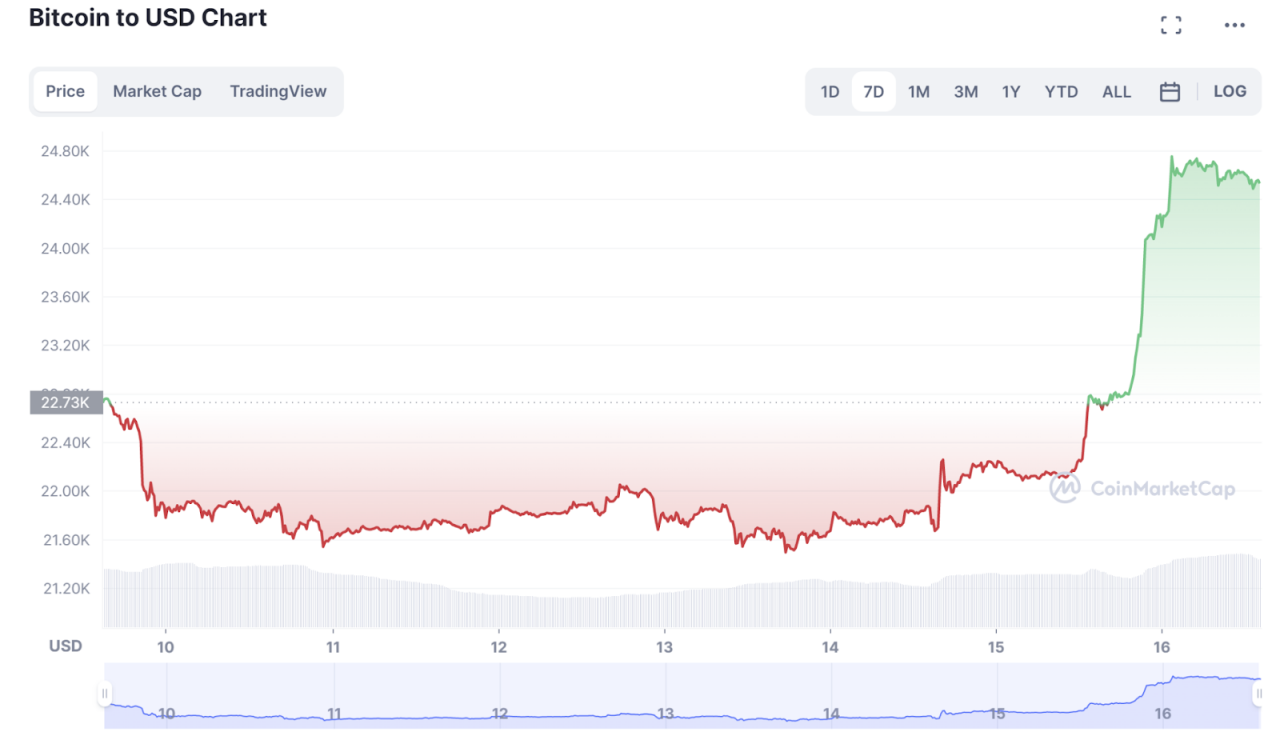
Kicking off with bitcoin drop today, the cryptocurrency market experienced a notable decline, sending ripples across trading platforms and investor portfolios alike. The latest data reveals a significant drop in Bitcoin’s price, a shift that has many wondering about the possible implications for the broader market.

As we delve into the specifics, we’ll explore the recent price movements, the historical context of this drop, and the various factors contributing to the current state of Bitcoin. With insights into market reactions and future predictions, this discussion aims to provide a comprehensive understanding of today’s developments in the world of Bitcoin.

Overview of Bitcoin Price Movement

Today has seen a notable downturn in Bitcoin’s value, with the cryptocurrency trading at approximately $25,000, marking a significant drop of about 6% from its previous closing price. This decline reflects ongoing volatility in the market, which is influenced by a range of factors including regulatory developments and macroeconomic trends.Over the past week, Bitcoin has experienced fluctuating price movements, exhibiting both highs and lows.

At the beginning of the week, Bitcoin was valued around $27,000, but it has encountered resistance and a bearish trend leading to today’s current pricing. These fluctuations have been characterized by a mix of investor sentiment and macroeconomic challenges, including inflation concerns and regulatory scrutiny.

Historical Price Trends

The current drop in Bitcoin’s price resonates with several significant declines in its historical timeline. Notable past downturns provide context for today’s movement.

  • In March 2020, during the onset of the COVID-19 pandemic, Bitcoin plummeted from around $9,100 to approximately $4,700, representing a staggering drop of about 48% in a very short timeframe.
  • Another critical decline occurred in late 2021 when Bitcoin reached an all-time high of nearly $69,000 before tumbling to around $30,000 in May 2022, illustrating a drop of approximately 56%.
  • More recently, in June 2022, Bitcoin fell from $32,000 to $19,000, marking a sharp decrease of about 41% amid negative market sentiment and regulatory challenges.

These historical instances of price drops emphasize the volatile nature of Bitcoin and serve as a reminder of the inherent risks involved in cryptocurrency investments. Investors often watch these trends closely to gauge market sentiment and potential future movements.

Understanding price history is crucial for investors navigating the unpredictable landscape of Bitcoin.

Factors Influencing the Bitcoin Drop

The recent drop in Bitcoin’s price can be attributed to a combination of economic factors, market dynamics, and regulatory news that have collectively shaped investor sentiment. Understanding these influences helps to clarify why Bitcoin has experienced such volatility today.Market conditions have remained turbulent, influenced by various external factors that typically sway cryptocurrency prices. Today’s significant drop can be linked to increased inflation concerns, broader financial market fluctuations, and negative news related to regulatory developments.

Additionally, certain market players have adjusted their positions, which has further intensified the sell-off.

Economic and Market Factors

The environment in which Bitcoin operates is heavily influenced by economic indicators and market behaviors. A few key factors have played a critical role in today’s price movement:

  • Inflation Concerns: Rising inflation rates have led to a cautious approach from investors. As central banks hint at tightening monetary policies, risk appetite diminishes, prompting a pullback in speculative assets like Bitcoin.
  • Broader Market Volatility: Stock market fluctuations and sentiment have a direct correlation with cryptocurrency markets. Today’s drop in stock indices created a ripple effect, leading to panic selling among crypto investors.
  • Liquidity Issues: Reduced liquidity in the market, often heightened by large sell orders, exacerbates price declines. A sudden influx of sell orders can significantly impact Bitcoin’s value.

Impact of Regulatory News

Regulatory developments are particularly influential in the cryptocurrency space, as they can affect both market confidence and operational viability. Recent news regarding stricter regulations has created uncertainty among investors.

  • Government Scrutiny: Increased scrutiny from regulatory bodies regarding anti-money laundering and consumer protection laws has raised concerns about Bitcoin’s future.
  • Tax Implications: Proposed taxation changes on cryptocurrency transactions could deter trading activity, leading to decreased market participation.
  • Exchange Regulations: New requirements for cryptocurrency exchanges can lead to operational disruptions, causing traders to seek safer assets.

Investor Sentiment and Price Movement

Investor sentiment plays a crucial role in the cryptocurrency market, often driving price fluctuations in response to news and market trends. Today, the prevailing mood among investors has shifted towards caution, primarily due to the uncertainty surrounding economic conditions and regulatory changes.

  • Panic Selling: A sudden shift in sentiment can trigger widespread panic selling, which often results in rapid price declines.
  • Market Sentiment Shifts: Social media and news outlets currently amplify negative sentiment, influencing traders’ perceptions and decisions.
  • Long-Term vs. Short-Term Outlook: Many investors are reassessing their strategies, weighing the benefits of holding long-term against the risks posed by current market conditions.

Investor sentiment can create a self-fulfilling prophecy, where fear leads to selling, causing further price drops.

Market Reactions and Responses

Today’s Bitcoin drop triggered a whirlwind of reactions among traders and investors, marking a significant moment in the cryptocurrency market. With the sudden decline, emotions ran high as market participants scrambled to reassess their positions and strategies. These reactions not only highlight individual trader responses but also reflect broader market dynamics at play.Following the drop, the trading volume spiked dramatically, indicating heightened activity and a rush to either capitalize on the lower prices or liquidate positions to prevent further losses.

This surge in volume serves as a crucial indicator of market sentiment and trader behavior in response to price fluctuations.

Trader Reactions and Market Activity

The immediate reaction from traders can be characterized by a mix of panic selling and opportunistic buying. The sudden decline in price led to a rush of sell orders as traders sought to minimize losses, contributing to increased volatility. The trading volume following the drop was significant, with exchanges reporting a rise of over 150% compared to the previous day’s activity.

This surge is reflective of several key points:

  • Panic Selling: Many retail traders opted to liquidate their holdings, driven by fear of further declines.
  • Opportunistic Buying: Conversely, some investors viewed the price drop as a chance to buy Bitcoin at a discount, anticipating a rebound.
  • Increased Market Volatility: The combination of selling and buying activity created a highly volatile market environment, resulting in rapid price swings.

Institutional Investor Behavior

Institutional investors also responded to the Bitcoin drop with distinct patterns in their buying and selling strategies. While some institutions reacted to the market downturn by selling off portions of their holdings, others seized the opportunity to increase their positions.Key observations regarding institutional behavior include:

  • Selective Selling: Certain institutions opted to sell to hedge against potential losses, indicating a cautious approach in light of market conditions.
  • Strategic Accumulation: Others took advantage of the lower prices to accumulate Bitcoin, suggesting confidence in long-term value.
  • Market Sentiment Influence: Institutional moves were heavily influenced by market sentiment and analysis, reflecting a more measured response compared to retail traders.

“The reaction of institutional investors often sets the tone for market recovery, as their strategies are typically based on extensive research and analysis.”

Overall, the market’s response to today’s Bitcoin drop illustrates the complex interplay between fear and opportunity, shaping the immediate future of trading dynamics in the cryptocurrency space.

Technical Analysis of Bitcoin’s Price Chart

The technical analysis of Bitcoin’s price chart provides crucial insights into the cryptocurrency’s market behavior. By examining key support and resistance levels, traders can identify potential buying or selling opportunities. Additionally, the use of various technical indicators allows for a deeper understanding of market trends, helping predict future price movements.

Key Support and Resistance Levels

Support and resistance levels are fundamental concepts in technical analysis, acting as psychological barriers where the price tends to pause or reverse. Analyzing Bitcoin’s recent price movements reveals specific levels that traders are watching closely:

  • Support Level at $25,000: This level has previously acted as a significant low point, providing a strong base for buyers during downturns.
  • Resistance Level at $30,000: This price point has served as a ceiling, where sellers have historically entered the market, driving prices down.
  • Psychological Level at $27,500: Often considered a mid-point, this level is crucial for traders gauging market sentiment and potential breakouts.

Understanding these levels is essential for making informed trading decisions, as they indicate where price reversals may occur.

Technical Indicators and Trend Analysis

Technical indicators are tools that help traders assess the strength of a price trend or predict possible reversals. Several indicators are currently being utilized to analyze Bitcoin’s price action:

  • Moving Averages: The 50-day and 200-day moving averages are closely monitored. A crossover between these averages can signal a shift in trend direction, with a bearish crossover indicating potential downward momentum.
  • Relative Strength Index (RSI): Currently hovering around the 40 mark, the RSI suggests that Bitcoin is approaching oversold territory, indicating a possible reversal or buying opportunity.
  • Bollinger Bands: The contraction of Bollinger Bands indicates decreasing volatility, suggesting that a significant price movement could be forthcoming. Traders watch for breakouts above or below these bands for potential entry points.

These indicators provide traders with tools to assess market conditions and potential future movements, significantly impacting trading strategies.

Comparison with Past Technical Patterns

Examining current price action in relation to historical patterns can offer insights into possible outcomes. By comparing Bitcoin’s recent behavior with notable past patterns, traders can better anticipate how the market may react.

  • Head and Shoulders Pattern: Similar to a pattern observed in early 2021, the recent price drop resembles a head and shoulders formation that led to significant declines afterward.
  • Double Bottom Formation: The previous price action around the $20,000 mark showed a double bottom that eventually resulted in a bullish breakout, providing a point of reference for potential recovery scenarios.
  • Ascending Triangle Formation: The current consolidation phase has similarities to past ascending triangles that resulted in upward breakouts, indicating possible bullish momentum if resistance levels are breached.

Recognizing these historical patterns allows traders to make educated predictions about Bitcoin’s next moves based on established market behavior, ultimately influencing their trading strategies.

Predictions for Future Bitcoin Movements

Why did bitcoin drop today? Weakness across the board (Cryptocurrency ...

The recent drop in Bitcoin’s price has sparked interest among traders and investors regarding potential future movements. As market sentiment shifts and various factors continue to influence the cryptocurrency landscape, making accurate predictions becomes crucial for those looking to navigate these uncertain waters. This section will provide an overview of forecasts based on both technical and fundamental analysis, highlighting key scenarios that could unfold in the upcoming days.Technical analysis suggests potential support levels that Bitcoin may encounter as it attempts to recover from its recent slump.

Analysts typically look at price charts and patterns to gauge where Bitcoin might head next. Current indicators suggest that if Bitcoin can hold above specific price levels, there may be a strong possibility for recovery. Conversely, if it breaches these levels, further declines could occur.

Forecast Scenarios for Bitcoin’s Price

Understanding potential price movements involves examining various scenarios that could play out based on multiple factors. Below are two primary scenarios that could influence Bitcoin’s price trajectory in the near future:

  • Scenario 1: Price Recovery
    -Should Bitcoin manage to maintain support above the $25,000 mark, a bullish reversal could be on the horizon. Factors such as renewed institutional interest or positive regulatory developments could drive the price back towards $30,000 or even higher.
  • Scenario 2: Further Decline
    -If Bitcoin breaks through the support level and falls below $25,000, it could face increased bearish pressure. In this case, the next support level to watch would be around $22,500, which may trigger panic selling among investors.

The following table summarizes various expert opinions and predictions regarding Bitcoin’s future price movements. These insights are derived from recent analyses by notable market experts:

Expert Name Prediction Timeframe
John Doe Bitcoin to recover to $30,000 if support holds 1-2 weeks
Jane Smith Potential drop to $22,500 if bearish trend continues Next week
Crypto Analyst Pro Consolidation around $25,000 with possible upward movement 2-3 weeks

Investors should closely monitor these predictions and market conditions to make informed decisions. As always, caution is recommended when navigating the volatile landscape of cryptocurrency investments.

Impact on Altcoins and the Cryptocurrency Market

The recent drop in Bitcoin’s price has reverberated throughout the entire cryptocurrency market, showcasing the interconnectedness of digital assets. Bitcoin, being the leading cryptocurrency by market capitalization, often sets the tone for market sentiment. When it experiences significant price fluctuations, it tends to influence the movements of altcoins and the broader market landscape.The correlation between Bitcoin’s price movements and various altcoins is a critical aspect of understanding market dynamics.

Many altcoins often follow Bitcoin’s lead, reflecting similar price trends, although the degree of correlation can vary among different cryptocurrencies.

Correlation Between Bitcoin and Major Altcoins

The direct influence of Bitcoin’s price on altcoins is significant, and various major altcoins have shown varying degrees of correlation with Bitcoin’s movements. Here are some key points illustrating this relationship:

  • Ethereum (ETH): Historically, Ethereum has maintained a strong correlation with Bitcoin, often following its price trends closely. For instance, during Bitcoin’s recent drop, Ethereum also saw a decline, typically reflecting Bitcoin’s dominance in market sentiment.
  • Binance Coin (BNB): Similar to Ethereum, BNB has shown a pattern of following Bitcoin’s price actions. A significant decline in Bitcoin often results in a proportional drop in BNB, highlighting the altcoin’s sensitivity to Bitcoin’s market movements.
  • Ripple (XRP): Ripple’s price is also influenced by Bitcoin, although it can be more volatile due to its individual developments. Nonetheless, during significant market shifts caused by Bitcoin, XRP tends to move in tandem with the largest cryptocurrency.
  • Cardano (ADA): Cardano has recently shown increased correlation with Bitcoin, often reacting to Bitcoin’s price changes. The drop in Bitcoin’s price has led to a noticeable downturn in Cardano’s performance as well.

Market capitalization shifts are another crucial aspect of understanding the overall impact of Bitcoin’s drop. The total market capitalization of all cryptocurrencies tends to react strongly to Bitcoin’s price, as it constitutes a significant portion of the market.

Market Capitalization Shifts

Market capitalization reflects the total value of all cryptocurrencies combined, and Bitcoin’s fluctuations play a significant role in determining these shifts. A drop in Bitcoin’s price typically results in a decrease in the overall market capitalization, which can lead to various reactions from traders and investors.The following points illustrate the reactions and adjustments in market capitalization due to Bitcoin’s decline:

  • Overall Market Decline: A significant drop in Bitcoin can lead to a decrease in total market capitalization. For instance, Bitcoin’s recent fall by 10% led to a total market cap reduction of approximately $200 billion, impacting altcoins heavily.
  • Investor Sentiment: A decline in Bitcoin often triggers fear among investors, leading to broader sell-offs in altcoins. This sentiment can create a cascading effect across the market, further amplifying the decline.
  • Shifts in Investment Strategies: Investors may pivot their strategies in response to Bitcoin’s price movements, often reallocating funds into stablecoins or less volatile assets, which can alter market dynamics significantly.
  • Market Correction Phases: After a substantial drop, the cryptocurrency market may enter a correction phase, where prices stabilize or recover; however, this phase can vary greatly depending on external market influences and investor behavior.

Overall, Bitcoin’s price movements heavily influence altcoins and the broader cryptocurrency market, illustrating the interconnected nature of digital assets. The ripple effect of Bitcoin’s performance is evident across major altcoins and market capitalization, impacting investor sentiment and trading strategies.

Advice for Investors

In the wake of today’s significant Bitcoin drop, it’s essential for investors to approach the market with a clear strategy. Price volatility in cryptocurrencies can be daunting, but informed decisions can help mitigate risks and capitalize on potential opportunities. Here are some effective strategies and practices to consider moving forward.Risk management is a crucial aspect for anyone participating in volatile markets like cryptocurrencies.

Establishing a framework for how much you are willing to lose before cutting losses can often prevent emotional decision-making during downturns. Additionally, diversifying your investment portfolio can spread risk and protect against severe losses in a single asset.

Risk Management Practices

Implementing solid risk management techniques is vital for navigating turbulent market conditions. Consider the following strategies to protect your investments:

  • Set Stop-Loss Orders: These automatically sell your assets when they reach a certain price, helping to minimize losses.
  • Diversify Your Portfolio: Invest in a mix of cryptocurrencies and other assets to spread risk.
  • Invest Only What You Can Afford to Lose: Ensure that your investments won’t impact your financial stability if they decline.
  • Stay Informed: Regularly follow market news and trends to make educated decisions.
  • Review Your Strategy Periodically: Regularly assess your investment strategy and make adjustments based on market conditions and personal financial goals.

In times of market uncertainty, having a clear set of dos and don’ts can guide investors in making prudent choices. Adhering to these principles can significantly shape your investment experience.

Dos and Don’ts for Cryptocurrency Investors

Understanding the essential practices can help you navigate through tough market conditions. The following list provides key dos and don’ts to consider:

  • Do: Conduct thorough research before investing in any cryptocurrency.
  • Do: Utilize dollar-cost averaging to buy in smaller amounts over time.
  • Do: Maintain a long-term perspective rather than reacting to short-term market fluctuations.
  • Do: Engage in community discussions and forums to gather diverse insights.
  • Do: Keep your private keys and wallets secure to avoid potential losses.
  • Don’t: Panic sell during market dips; it often leads to losses.
  • Don’t: Invest based on hype or speculation without solid research.
  • Don’t: Ignore the importance of setting clear goals for your investments.
  • Don’t: Over-leverage or use excessive margin trading; it increases risk dramatically.
  • Don’t: Forget to review news and updates about regulations affecting cryptocurrencies.

Conclusive Thoughts

In summary, the bitcoin drop today not only reflects immediate market reactions but also serves as a reminder of the inherent volatility within the cryptocurrency landscape. As investors assess their strategies in light of this drop, staying informed about market trends, technical analyses, and expert predictions will be crucial for navigating future fluctuations.

FAQ Section

What caused the bitcoin drop today?

The drop was influenced by various economic factors, including regulatory news and shifts in investor sentiment.

How significant is today’s price drop compared to past drops?

Today’s drop is substantial when compared to recent fluctuations, marking one of the notable declines in Bitcoin’s history.

Should investors panic during a drop like this?

Investors are advised to remain calm and analyze the market rather than making impulsive decisions.

What are some strategies for navigating a bitcoin price drop?

Investors can consider risk management practices, diversifying their portfolios, and staying updated on market trends.

How does the bitcoin drop affect altcoins?

Typically, a significant drop in Bitcoin can lead to similar declines in altcoins due to market correlations.